Table of Contents
- Dental Implant Recovery Timeline and Pain: What to Expect
- Dental Implant Recovery Day by Day
- How Long Does Dental Implant Pain Last?
- Dental Implant Aftercare Instructions
- What to Eat After Dental Implant Surgery
- Normal Healing vs. Warning Signs: A Symptom Guide
- Recovery Differences by Procedure Type and Health Factors
- Conclusion
- Frequently Asked Questions
Last Updated: October 21, 2026
Dental Implant Recovery Timeline and Pain: What to Expect
Most patients are surprised by how manageable implant recovery actually is. The dental implant recovery timeline and pain you experience follow a predictable pattern: soreness peaks in the first two to three days, eases noticeably within a week, and settles into a long, quiet phase of bone healing that takes several months. At Canyon Dental, we walk patients through this schedule before surgery so nothing catches them off guard.
Dental implant recovery is the staged healing process that follows placement of a titanium post in the jawbone, moving from soft-tissue repair in the first week to bone integration over three to six months. Understanding the stages helps you plan rest, meals, and work around the moments that matter most.
We wrote this guide to give you a realistic picture, not a worst-case story. Here is the short version: the first 48 hours demand the most attention, the first week sets the tone for healing, and the months that follow require patience more than pain management. Below, we break down each stage, flag the warning signs that warrant a call to your dentist, and explain how aftercare decisions in the first few days shape the weeks that follow.
Dental Implant Recovery Day by Day
Recovery follows a fairly consistent arc, though the pace depends on how many implants were placed, whether bone grafting or a sinus lift was involved, and your general health. The timeline below reflects a straightforward single implant in healthy bone; more involved surgery typically stretches each phase by a few days.
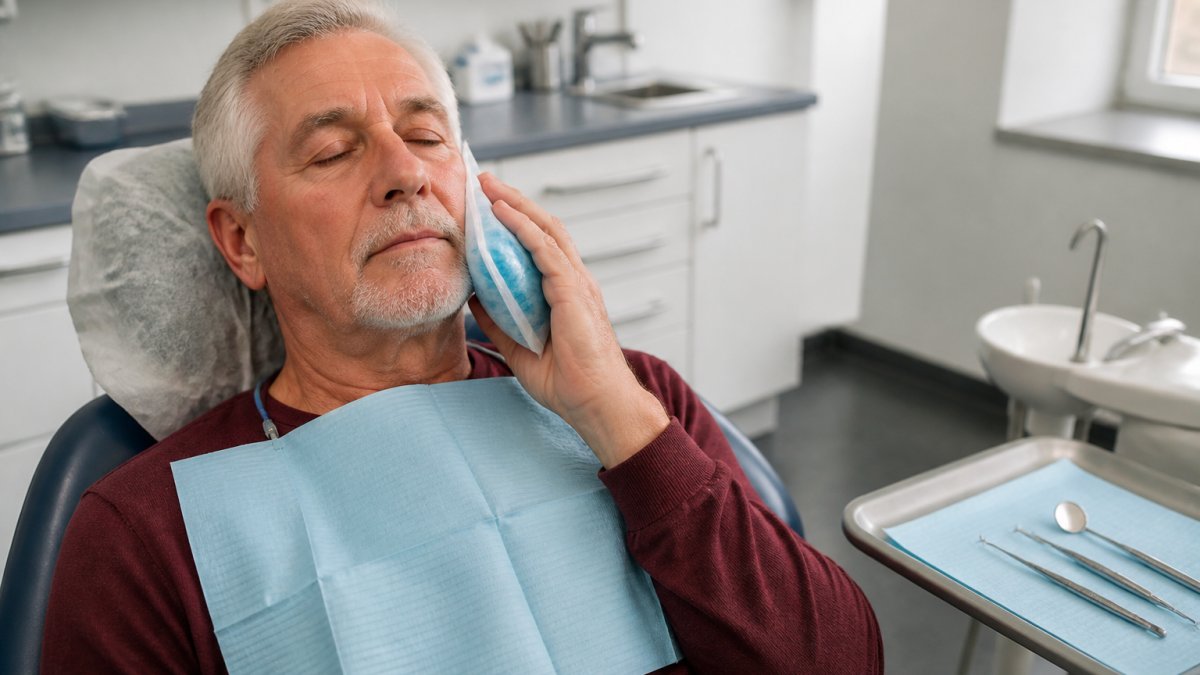
Day 1 (surgery day). Local anesthesia wears off within a few hours, and you may feel a dull throb as sensation returns. Minor oozing is normal: bite gently on gauze for 30-45 minutes if bleeding persists, and start cold compresses right away. Keep your head elevated, avoid rinsing or spitting, and skip straws.
Days 2-3 (peak). Swelling and soreness reach their height, usually within 48-72 hours. This is the window where ice, rest, and consistent pain relief do the heavy lifting. Swelling may make the site look worse than it feels; that is expected. Sleep with your head propped up, and keep food soft and lukewarm.
Days 4-7 (turning point). Swelling subsides, discomfort drops to a dull ache, and minor bleeding has typically stopped. Most desk-job patients return to work within one to three days, though physically demanding work may warrant a week off.
Week 2. Soft tissue is largely healed. Non-dissolving sutures, if used, are typically removed around this point. Discomfort is usually minimal, but the implant site still needs gentle handling.
Weeks 3-8. Discomfort is generally gone. Bone begins integrating with the implant surface, a process you cannot feel but that determines long-term stability. Avoid chewing directly over the site and keep up gentle hygiene.
Months 3-6. Osseointegration completes. The final crown or restoration is placed once the implant is stable, which most practitioners confirm with imaging or a stability check.
How procedure type shifts the timeline. A single implant in healthy bone follows the arc above. Bone grafting adds a healing phase before or alongside implant placement, often extending the overall timeline by weeks to months.
Schedule implant surgery for a Thursday or Friday if you can. The peak soreness days then fall on the weekend, when rest is easier to arrange.
How Long Does Dental Implant Pain Last?
Dental implant pain typically lasts three to five days at its most noticeable, with most discomfort fading within a week. Over-the-counter pain relievers manage the majority of cases. More involved procedures, such as bone grafting, a sinus lift, or multiple implants, may extend soreness by a few days because there is more surgical site to heal.
The first 72 hours are the most intense. After that, pain should trend steadily downward. A common pattern practitioners watch for is discomfort that improves through day three or four and then worsens; that pattern deserves a call to your dentist rather than another pain pill.
Medication safety matters here. Take pain relievers exactly as directed on the label or by your clinician. A frequent mistake is combining multiple products that contain the same active ingredient, such as a prescription pain reliever and an over-the-counter cold or sinus product that also contains acetaminophen, which can lead to unintended overdose (the FDA). Tell your dentist about any blood thinners, chronic conditions, or medications you take before surgery, and never exceed labeled doses. Do not drink alcohol while taking prescription pain medication.
When pain relief is not working. If the recommended dose is not controlling your discomfort, do not simply take more or add a second product on your own. Call your dentist. Persistent or escalating pain can signal a problem, such as infection or a dry socket-like complication, that needs clinical evaluation rather than a stronger pill. Your clinician can adjust the plan safely based on your history.
What you can do alongside medication. Cold compresses for the first 48 hours, keeping your head elevated, and resting rather than pushing through activity all reduce the soreness medication has to cover. Skipping strenuous exercise for at least a week matters here too: an elevated heart rate can increase bleeding and swelling, which in turn increases pain.
Do not poke, prod, or lift the gum tissue around the implant site to “check” on it. This disrupts the forming blood clot and can delay healing or introduce bacteria, which can turn manageable soreness into a complication.
Dental Implant Aftercare Instructions
Aftercare in the first week determines how smoothly the rest of recovery goes. Follow these instructions closely.

- Bleeding: Bite gently on gauze for 30-45 minutes if bleeding persists. Some minor oozing for the first day is normal.
- Swelling: Apply a cold compress for 15-20 minutes at a time during the first 48 hours.
- Oral hygiene: Brush surrounding teeth gently. Avoid brushing directly over the surgical site until cleared, and do not rinse vigorously or use a straw for the first 24 hours.
- Rest: Skip strenuous exercise for at least a week. Elevated heart rate can increase bleeding and swelling.
- Smoking: Avoid it entirely during healing; it interferes with gum tissue recovery and bone integration.
A common mistake is over-cleaning the implant site out of anxiety. Gentle is the operative word.
Do not poke, prod, or lift the gum tissue around the implant site to “check” on it. This disrupts the forming blood clot and can delay healing or introduce bacteria.
What to Eat After Dental Implant Surgery
Soft foods protect the surgical site and keep you comfortable during the first week. Stock your kitchen before surgery day so you are not improvising while sore.
Good choices include yogurt, scrambled eggs, mashed potatoes, smoothies without straws, soup cooled to lukewarm, cottage cheese, and soft pasta. Avoid crunchy, sticky, spicy, or very hot foods, and skip chewing directly over the implant site.
As soreness fades around days 5-7, reintroduce firmer foods gradually. Chewing on the opposite side protects the implant site while it stabilizes. Staying hydrated matters too, but sip rather than gulp, and skip straws for the first few days.
Normal Healing vs. Warning Signs: A Symptom Guide
Knowing what normal looks like makes it easier to spot a problem early. Use this symptom-by-symptom guide.
| Symptom | Normal Healing | Contact Your Dentist If |
|---|---|---|
| Pain | Peaks days 2-3, fades by day 7 | Worsens after day 4 or is severe |
| Swelling | Peaks 48-72 hours, then subsides | Spreads or persists past a week |
| Bleeding | Minor oozing for 24 hours | Heavy or persistent bleeding |
| Bruising | Mild, fades within days | Extensive or worsening bruising |
| Fever | Absent or very low | Fever develops |
| Implant site | Tender, healing gum tissue | Pus, foul taste, or loosening |
The clearest sign of a complication is a symptom that improves and then worsens. Steady improvement, even slow, is the pattern you want.
Recovery Differences by Procedure Type and Health Factors
Not every implant recovery looks the same, and that is where generic timelines fall short. A single implant in healthy bone heals on a faster track than a sinus lift or full-arch reconstruction.
Procedure complexity. Bone grafting adds a healing phase before or alongside implant placement, often extending the overall timeline. Sinus lift procedures involve additional tissue healing near the upper jaw. Multiple implants mean more surgical sites and typically more swelling and soreness in the first week.
Health factors. Conditions that affect circulation or immune response, such as diabetes, can slow gum tissue and bone healing. Some medications, including blood thinners, influence bleeding risk and should be discussed before surgery. Smokers face slower healing and higher complication risk. Age alone is rarely the deciding factor; overall health and oral hygiene habits matter more.
Return-to-work planning. Most patients who work desk jobs return within one to three days. Physically demanding work may warrant a week off. Exercise, heavy lifting, and air travel should wait until your dentist clears them, usually around the one-week mark.
At Canyon Dental, our in-house sedation dentistry helps anxious patients get through surgery comfortably. We plan recovery guidance around your specific procedure, not a one-size-fits-all handout.
Schedule implant surgery for a Thursday or Friday if you can. The peak soreness days then fall on the weekend, when rest is easier to arrange.
Conclusion
Recovery from implant surgery is a short, manageable stretch of discomfort followed by months of quiet healing. The patients who do best are the ones who plan ahead: stocking soft foods, arranging rest for the first 48 hours, and knowing which symptoms are normal and which deserve a call.
If fear of recovery has kept you from replacing a missing tooth, talk to us. At Canyon Dental, our certified in-house sedation dentistry keeps anxious patients comfortable, our in-house dental lab supports precise restorations, and our team guides you through every stage of healing. Schedule a consultation and get a recovery plan built around your procedure and your life.
Frequently Asked Questions
What are the signs that a dental implant is healing well?
Signs of healthy healing include gradually decreasing pain and swelling, no fever, and gums that look pink and firm around the implant site. Minor bleeding in the first 24 hours is normal. You should be able to return to most daily activities within a few days. If pain or swelling increases after day three, or if you notice pus or a bad taste, contact your dentist promptly.
How long does dental implant pain last?
Most people experience the most discomfort in the first 48 to 72 hours after surgery. Pain typically peaks around day two or three and then gradually improves over the first week. By days 5 to 7, many people need little or no pain medication. Some mild soreness can linger for a couple of weeks, but sharp or worsening pain beyond the first week should be evaluated by your dentist.
What should I eat after dental implant surgery?
Stick to soft foods for the first few days: yogurt, smoothies, mashed potatoes, scrambled eggs, and well-cooked pasta. Avoid hot, spicy, crunchy, or sticky foods, and do not use a straw for at least a week because suction can disturb the blood clot. As soreness fades, gradually add softer solid foods. Chew on the opposite side of the implant site until your dentist says it is safe to chew normally.
When can I return to work after dental implant surgery?
Many people return to desk work the next day, especially if sedation was not used. If you had sedation or a more complex procedure such as bone grafting, plan to take one to two days off. Avoid heavy lifting and strenuous exercise for at least three to five days, as increased blood pressure can worsen swelling and bleeding. Your dentist will give you specific guidance based on your procedure.
When should I call my dentist about pain or swelling after an implant?
Call your dentist if pain or swelling gets worse after day three instead of better, if you have a fever, if bleeding continues heavily beyond the first day, or if you notice pus, a bad taste, or the implant feels loose. These can be signs of infection or other complications. Early treatment is easier, so do not wait for your next scheduled visit if something feels wrong.
What does a failed dental implant feel like?
A failing implant may feel loose, or you may notice increasing pain, swelling, or gum recession around the site weeks or months after surgery. Some people experience a bad taste or pus. However, many implant problems cause no obvious symptoms early on, which is why follow-up visits matter. If you have persistent discomfort or any of these signs, contact your dentist for an evaluation.