Quick Summary
The Dental Center alternative for sedation in Orem is a practice that offers the sedation levels you need in-house, with qualified staff who monitor you throughout treatment. Compare options such as nitrous oxide, oral conscious sedation, and IV sedation, and ask about permits, monitoring, itemized costs, and insurance coverage before you book a consultation.
- Ask whether a practice offers each sedation level in-house or refers out for IV sedation and general anesthesia.
- Confirm who administers and who monitors you, and that the sedation provider holds a current Utah permit for the level proposed.
- Request an itemized estimate that separates the sedation fee from the procedure fee.
- Check with the front office how your dental plan would cover sedation before treatment.
- Schedule a sedation consultation to review your medical history and medications before any medication is given.
Table of Contents
- Why Patients in Orem Look for a Sedation Alternative
- What Sedation Dentistry Is and How It Helps Dental Anxiety
- Types of Oral Sedation and What Medication Is Used
- IV Sedation Dentistry: What to Expect Before, During and After
- Nitrous Oxide, General Anesthesia and Drug-Free Options
- Is Dental Sedation Dangerous? Safety, Eligibility and Provider Qualifications
- Comparing Sedation Alternatives in Orem: Costs, Insurance and Availability
- Booking Your Sedation Consultation in Orem
- Frequently Asked Questions
Why Patients in Orem Look for a Sedation Alternative
Dental anxiety keeps many people out of the chair, even when they know they need care. If you are searching for “The Dental Center alternative for sedation,” you are likely weighing your options before you commit. That is a reasonable place to start. This guide walks through the sedation choices generally available, what each one involves, and what to ask any provider before you book.
Patients look for alternatives for a few common reasons. Some want a different sedation method than the one they were offered. Others want to compare costs, insurance coverage, or how quickly a practice can fit them in. Some simply want a second opinion on whether sedation is needed at all. Each of these is a valid reason to compare providers.
We recommend treating the search as a checklist rather than a single decision. Look at the sedation options offered, the qualifications of the people providing them, how the practice monitors patients, and what the appointment logistics look like.
What Sedation Dentistry Is and How It Helps Dental Anxiety
Sedation dentistry is the use of medication to help patients stay calm and comfortable during dental treatment. It ranges from mild relaxation, where you remain awake and responsive, to deeper sedation, where you may not remember much of the procedure. The level depends on the medication used, the dose, and the treatment planned.
For patients with dental anxiety or phobia, sedation can make a visit feasible when it otherwise would not be. It does not replace good communication, but it can reduce the physical tension and stress that make appointments hard to sit through.
Sedation is not right for everyone. A consultation will review your medical history, current medications, and any conditions that affect how sedatives work in your body.
Types of Oral Sedation and What Medication Is Used
Oral sedation involves taking a prescribed medication by mouth, usually about an hour before treatment. The most common medications are benzodiazepines, which produce a relaxed, drowsy state. Patients typically stay conscious and can respond to instructions, although they may not remember much afterward.
Oral conscious sedation is often used for routine procedures such as fillings, cleanings, or extractions. Because the effects last for hours, most patients need someone to drive them home. Your provider should explain exactly which medication is planned, the dose, and what to expect in the hours that follow.
Ask any practice which specific medication it uses, how the dose is chosen, and who monitors you during treatment.
IV Sedation Dentistry: What to Expect Before, During and After
IV sedation delivers medication directly into a vein, which allows the provider to adjust the level of sedation throughout the appointment.
Before treatment, you will usually be asked not to eat for a set period and to arrange a ride home. During the procedure, a trained team member monitors your breathing, heart rate, and blood oxygen levels. After treatment, you may feel drowsy for several hours and may not remember parts of the visit.
A practical tip: confirm who will be present to monitor you and how emergencies are handled before you agree to IV sedation.
Nitrous Oxide, General Anesthesia and Drug-Free Options
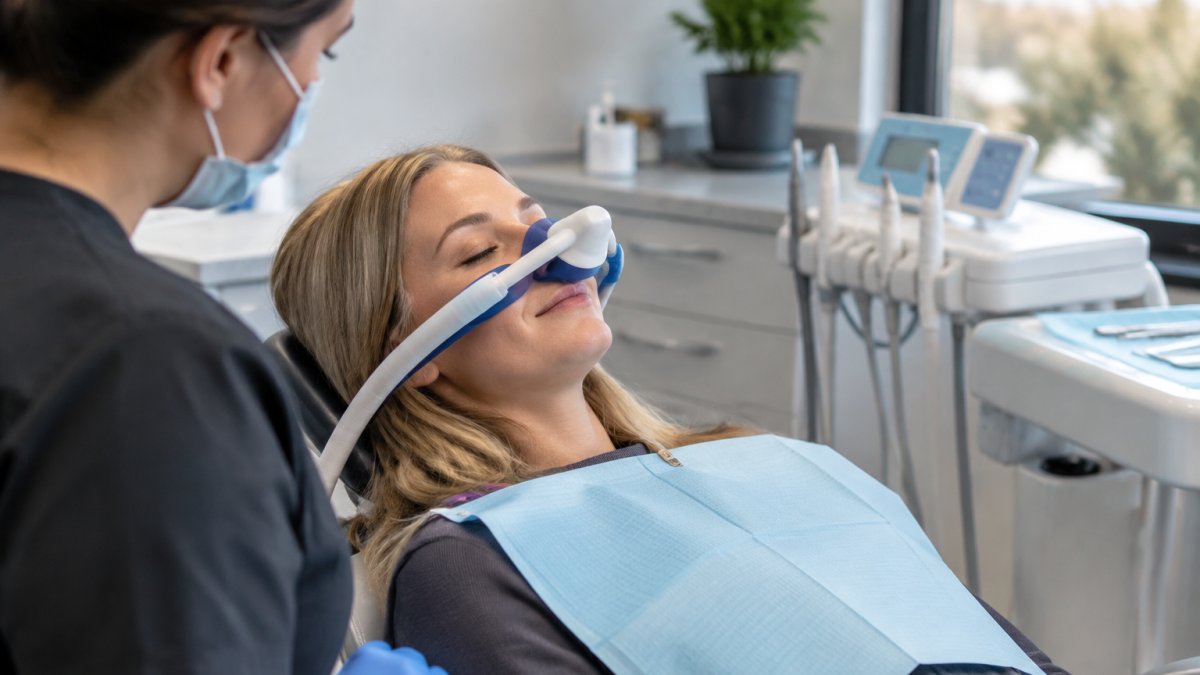
Nitrous oxide, often called laughing gas, is inhaled through a small nasal mask. It produces mild relaxation and wears off quickly once the gas is stopped, so patients usually drive themselves home afterward. It is generally the lightest sedation option.
General anesthesia puts the patient fully asleep and is typically used for extensive surgery or for patients who cannot cooperate. It requires a specialized anesthesia provider and a more involved setup than other options.
Drug-free options include relaxation techniques, clear communication about each step, and scheduling shorter appointments. These can help some patients, particularly those with mild anxiety, but they may not be enough for severe dental phobia. Discuss with your provider which approach fits your situation.
Is Dental Sedation Dangerous? Safety, Eligibility and Provider Qualifications
Sedation carries real risks, and no honest guide should describe it as risk-free. The more useful question is not whether sedation is dangerous in the abstract but whether a given practice is set up to manage the risks for a patient like you. That comes down to three things: your health profile, the provider’s qualifications, and the monitoring in place during the appointment.
Your health profile and eligibility. Most healthy adults can be considered for nitrous oxide or oral sedation after a review of their medical history. Certain conditions call for extra caution or a modified plan: significant heart or lung disease, poorly controlled sleep apnea, pregnancy, kidney or liver disease, and some neurological conditions. Medications matter too, especially opioids, benzodiazepines, and other central nervous system depressants, because they can compound the effect of sedatives.
Provider qualifications and permits. In the United States, sedation practice is regulated at the state level, and Utah is no exception. In Utah, dentists who provide sedation beyond minimal levels are regulated by the state, and requirements vary by sedation level. Check the current requirements with the Utah Division of Occupational and Professional Licensing (DOPL).
Monitoring and emergency readiness. The level of monitoring should match the depth of sedation. For nitrous oxide, the provider watches your responsiveness and color. For oral sedation, expect periodic checks of your responsiveness and breathing. For IV sedation and general anesthesia, continuous monitoring typically includes pulse oximetry, blood pressure, and often capnography to track exhaled carbon dioxide, with a dedicated person watching those readings.
What to ask before you agree to sedation:
- What sedation level are you recommending for my treatment, and why?
- Do you hold a current Utah sedation permit for that level?
- Who will monitor me during the appointment, and what is their training?
- What monitoring equipment will be used?
- What is your emergency protocol, and is emergency equipment on site?
- What are the instructions for eating, drinking, and medications before the appointment?
- Who must drive me home, and how long should someone stay with me afterward?
Watch out: a practice that cannot tell you who holds the sedation permit or who will be monitoring you is a signal to get a second opinion before you book.
Comparing Sedation Alternatives in Orem: Costs, Insurance and Availability
Most sedation pages explain the four levels and stop there. For an alternative-seeking search, the useful comparison is not just which sedation exists but which practice in the Orem area actually offers it, who administers it, and what the visit will cost you out of pocket. Use the framework below to compare any provider, including Canyon Dental, on the same terms.
Start with availability by sedation type. Not every general dental office offers every level. Nitrous oxide is the most widely available and is commonly offered in general practices. Oral conscious sedation is also common but requires the prescribing dentist to hold the appropriate state permit.
Ask who administers and monitors each level. For nitrous oxide, the dentist or a trained auxiliary typically administers and monitors. For oral sedation, the prescribing dentist manages the dose and the practice monitors you.
Compare the cost structure, not just a single number. Sedation is usually billed separately from the dental procedure, and the fee depends on the drug, the duration, and the provider. Nitrous oxide is often the least expensive add-on and is frequently charged by time. Oral sedation typically carries a separate medication and monitoring fee.
Check insurance and payment options. Many dental plans cover nitrous oxide and oral sedation at least partially when medically necessary, but coverage for IV sedation and general anesthesia varies widely and is often limited. Medical insurance may sometimes apply when sedation is tied to a covered medical condition, but that is plan-specific.
Weigh travel and scheduling. Ask about wait times for a sedation consultation, whether sedation appointments are scheduled on specific days, and how long the appointment block is. A practice that can fit you in sooner may matter more than a small difference in fee.
Use this comparison checklist for any Orem-area provider:
- Which sedation levels are offered in-house, and which are referred out?
- Who administers and who monitors, and what credentials do they hold?
- What monitoring equipment is used during the appointment?
- What is the itemized estimate for sedation, procedure, and any facility fee?
- What will my dental plan cover, and what will I owe?
- Is financing available?
- How soon can I be seen, and how long is the appointment?
Watch out: a quote that bundles sedation into a single procedure price makes it hard to compare practices, so ask for the sedation portion separately.
The table below sets out how the main sedation levels differ in who offers them, who administers them and how they are billed.
| Sedation level | Who typically offers it | Billing note |
|---|---|---|
| Nitrous oxide | Widely available, often in general practices | Often charged by time |
| Oral conscious sedation | Common; prescribing dentist needs state permit | Separate medication and monitoring fee |
| IV sedation | Less common in general practices; often referred out | Usually costliest of the dental sedation options |
| General anesthesia | Oral surgeons, specialists or anesthesia providers | Involves anesthesia provider and monitoring |
Booking Your Sedation Consultation in Orem
A consultation is the best next step. It lets the provider review your health history, explain which sedation options suit your treatment, and answer your questions before any medication is given. Bring a list of your current medications, any past experiences with dental sedation, and your insurance information.

Before booking, confirm whether the practice provides in-house sedation, who will monitor you, and what the aftercare plan includes. Canyon Dental offers certified in-house sedation dentistry for patients in Orem. To start, schedule a sedation consultation and discuss the options that fit your needs.
Canyon Dental is glad to answer questions about sedation options before you decide. Call or visit the office in Orem to schedule your consultation and get a plan built around your comfort.
Frequently Asked Questions
Is dental sedation dangerous?
Dental sedation carries risks, and how well they are managed depends on the provider screening your medical history, reviewing medications, and monitoring your vital signs throughout the procedure. Risks rise with certain health conditions, higher sedation levels, and some medications. Ask any Orem provider about their monitoring equipment, emergency protocols, who administers the sedation, and whether an anesthesia professional is present for deeper sedation. A consultation before treatment is the best way to understand your individual risk.
What medication is used for oral sedation dentistry?
Oral sedation usually involves a prescription anti-anxiety medication taken by mouth before the appointment, most often a benzodiazepine such as triazolam or diazepam. The specific drug, dose and timing are chosen by the dentist based on your health history and the procedure planned. You will typically need a driver to take you home because the medication leaves you drowsy, and you should ask about any interactions with your current prescriptions.
What is the difference between oral sedation and IV sedation?
Oral sedation is taken as a pill and produces mild to moderate relaxation, while IV sedation is delivered through a vein and allows the provider to adjust the level of sedation during treatment. IV sedation typically works faster and is more controllable, but it requires more monitoring and a higher level of provider training. Nitrous oxide is a lighter option inhaled through a mask. Your dentist can recommend which method fits your anxiety level and the procedure.
How do I choose a dentist for sedation in Orem?
Look for a provider who discusses sedation options openly, reviews your medical history, and explains how they monitor you during treatment. Ask about the sedation credentials of the team, whether an anesthesia professional is present for deeper sedation, and what happens if you need extra care afterward. Compare how each Orem practice handles consultations, costs and insurance questions, and schedule a sedation consultation before committing to treatment.